The Infinite Diaspora
by coldweld
The Infinite Diaspora is a text-based, hard science fiction, cassette futurism game set in our very own solar system in the year 2500. You take command of your very own ship and its crew to trade, complete missions, form relationships, and more in a setting that does not care that you exist.
Based in realism: Where the game can follow real physics or procedure, it does so without sacrificing player fun. The physics (flight models, ballistics, travel time), the economy (stations generate real goods, which are then consumed), and relationships (named NPCs have a personality, opinion, relationships with one another, etc.) all follow this principle.
- Status
- In development
- Release
- Not announced
- Platform
- Tested only on Windows
- Price
- Not announced
Artificial Intelligence content disclosure
I use an LLM to generate and modify Python-language code. I design the game systems, mechanics, and its overall visual theme. An LLM drafted the first version of the game's text and I am currently rewriting it by hand in order to form a more cohesive story and setting. Music, sounds, and in-game computer model are sourced from human creators, who are credited in the game. The console picture is built by LLM-written code around a human-made model and will be replaced by a human-made picture.
A first look
Screens from the game as a player sees them. Click one to enlarge it. The environment around the consoles is a placeholder that will be replaced by a human-made version.
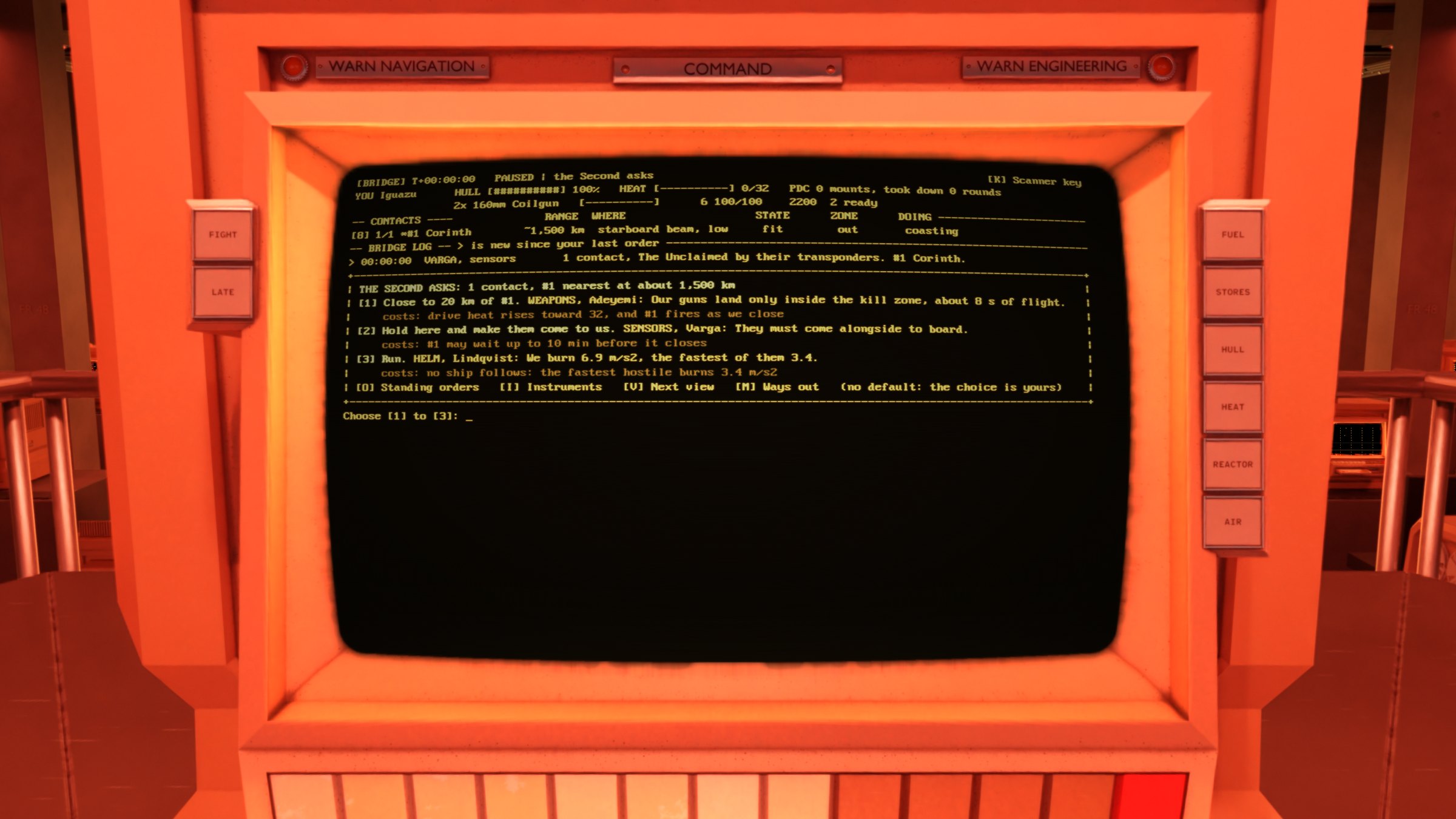
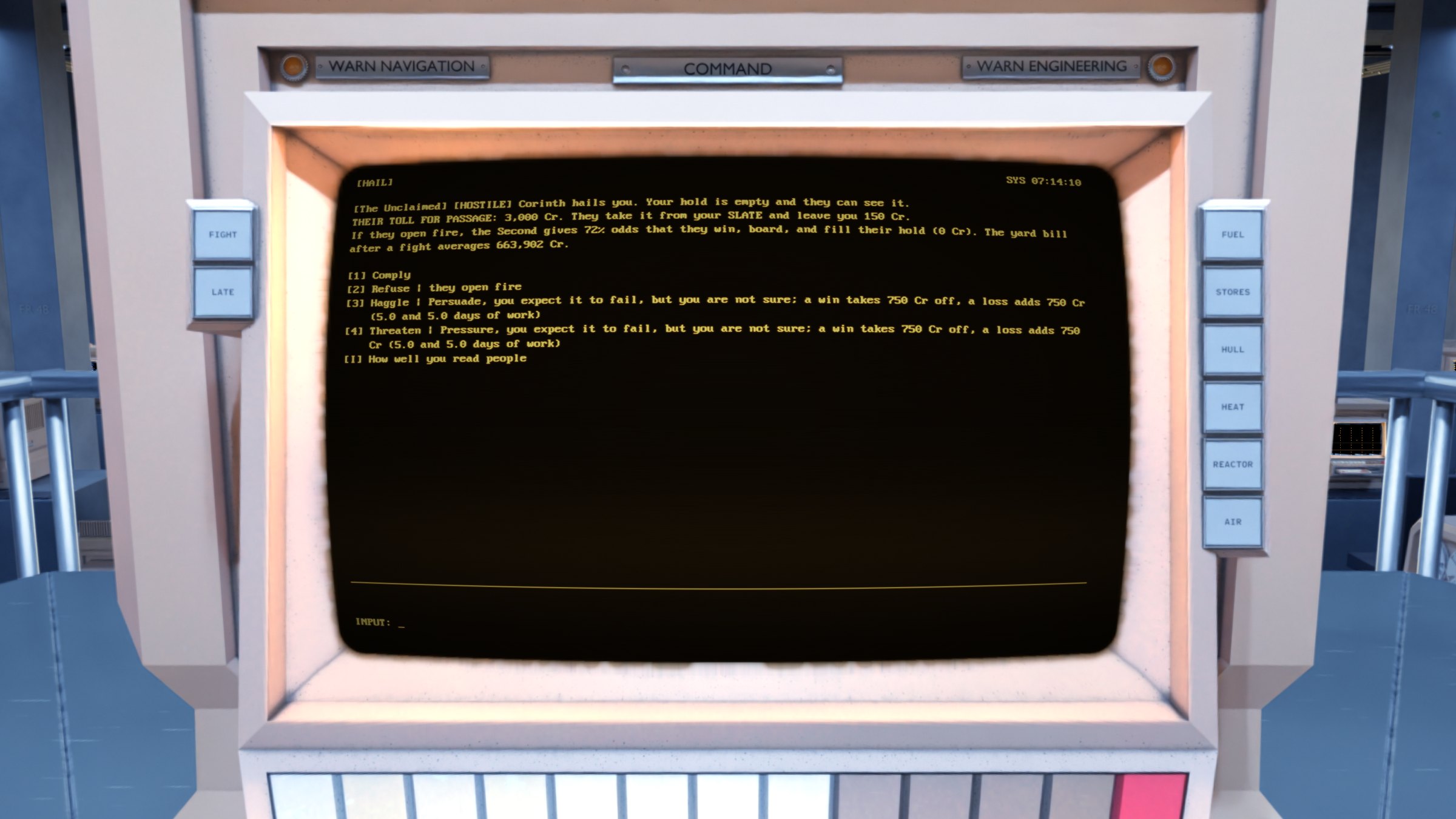
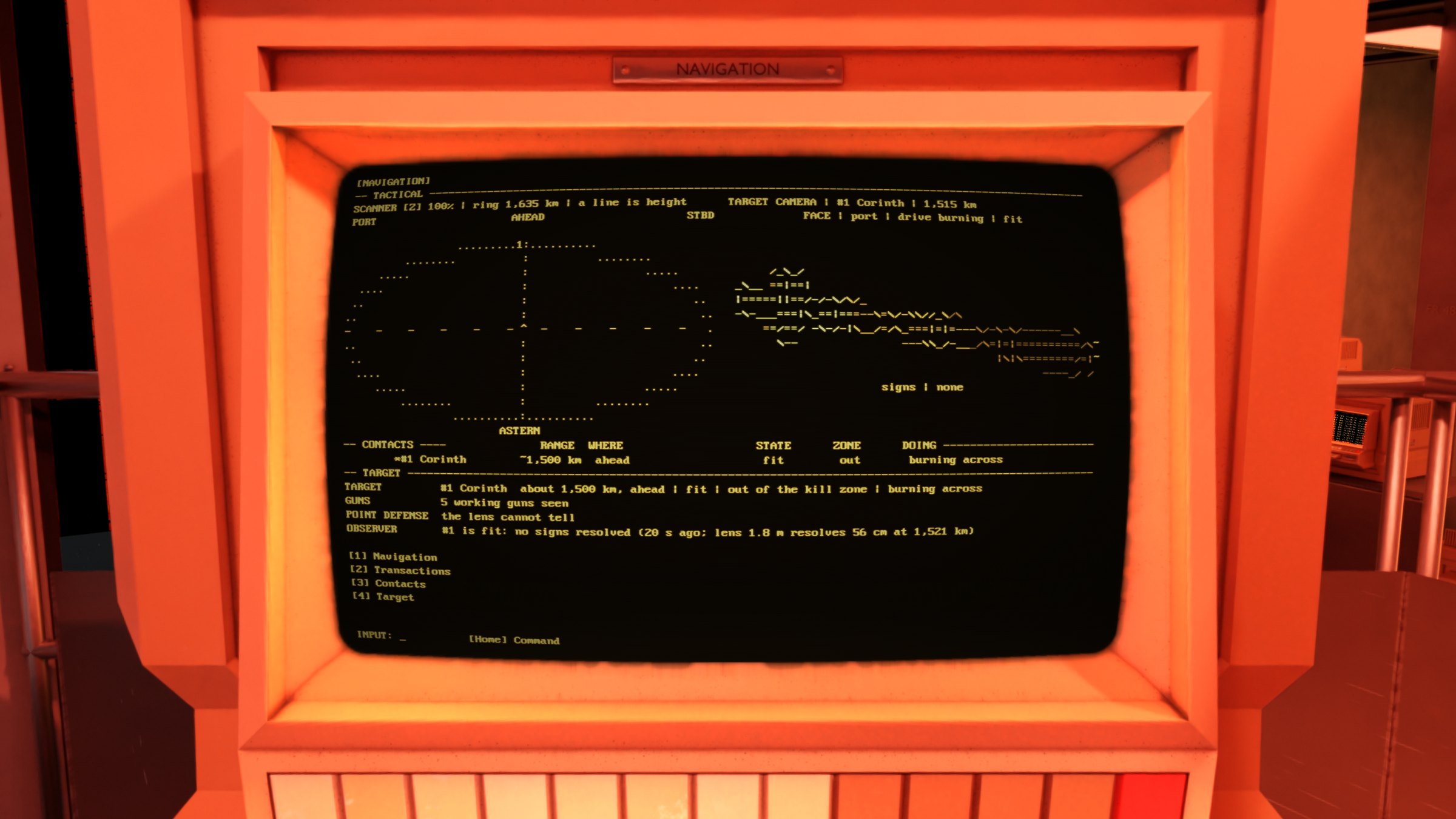
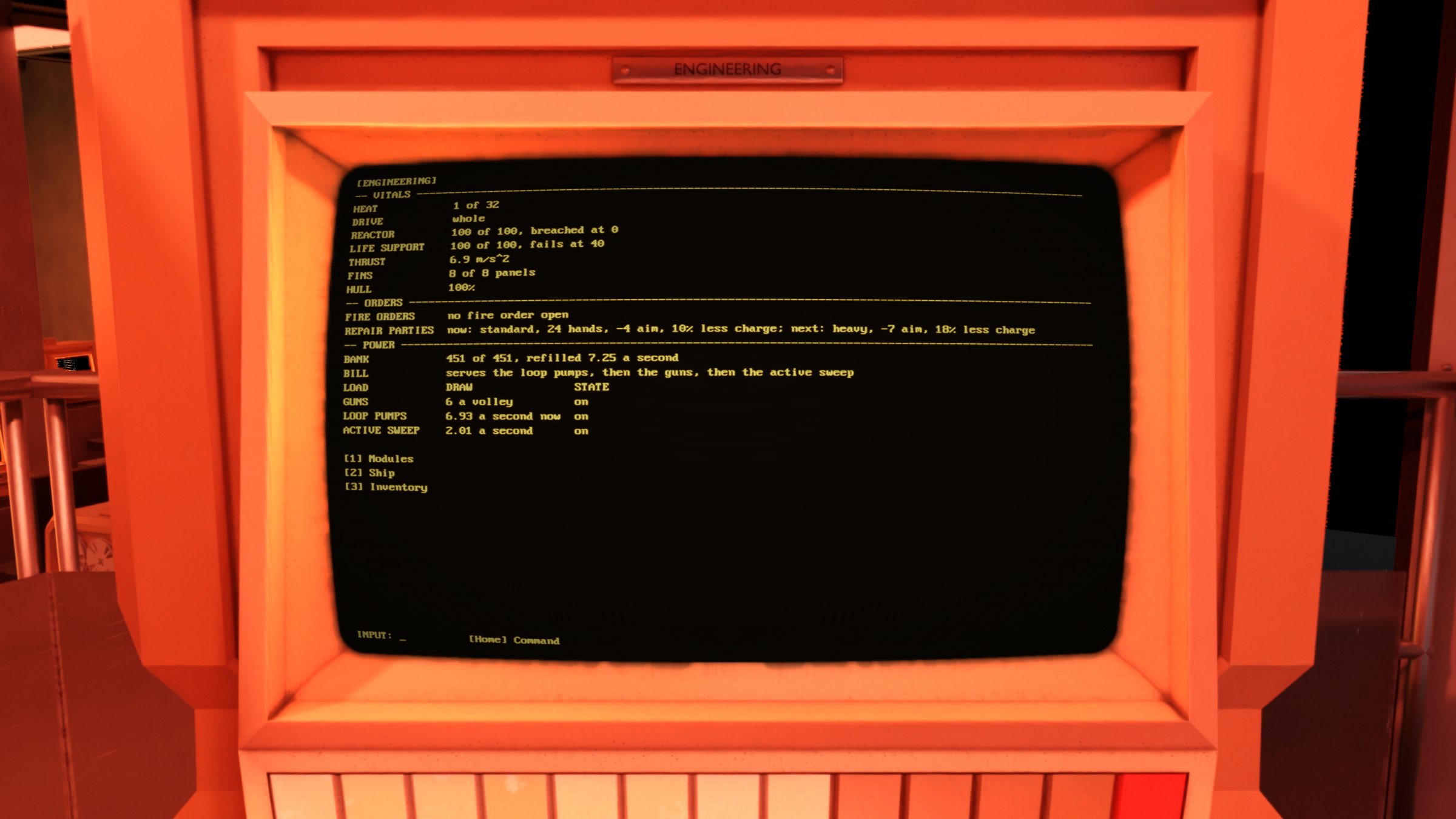
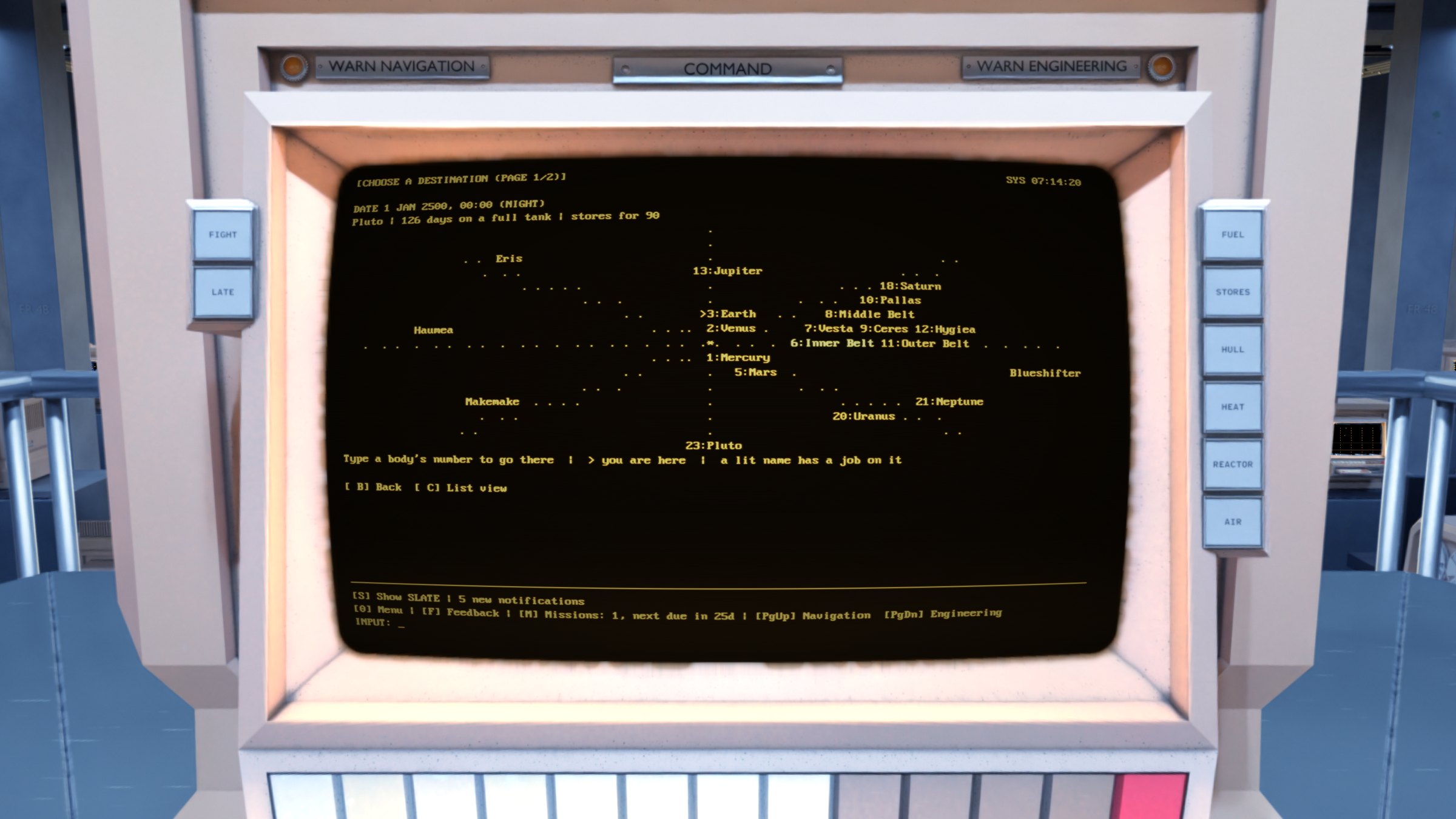
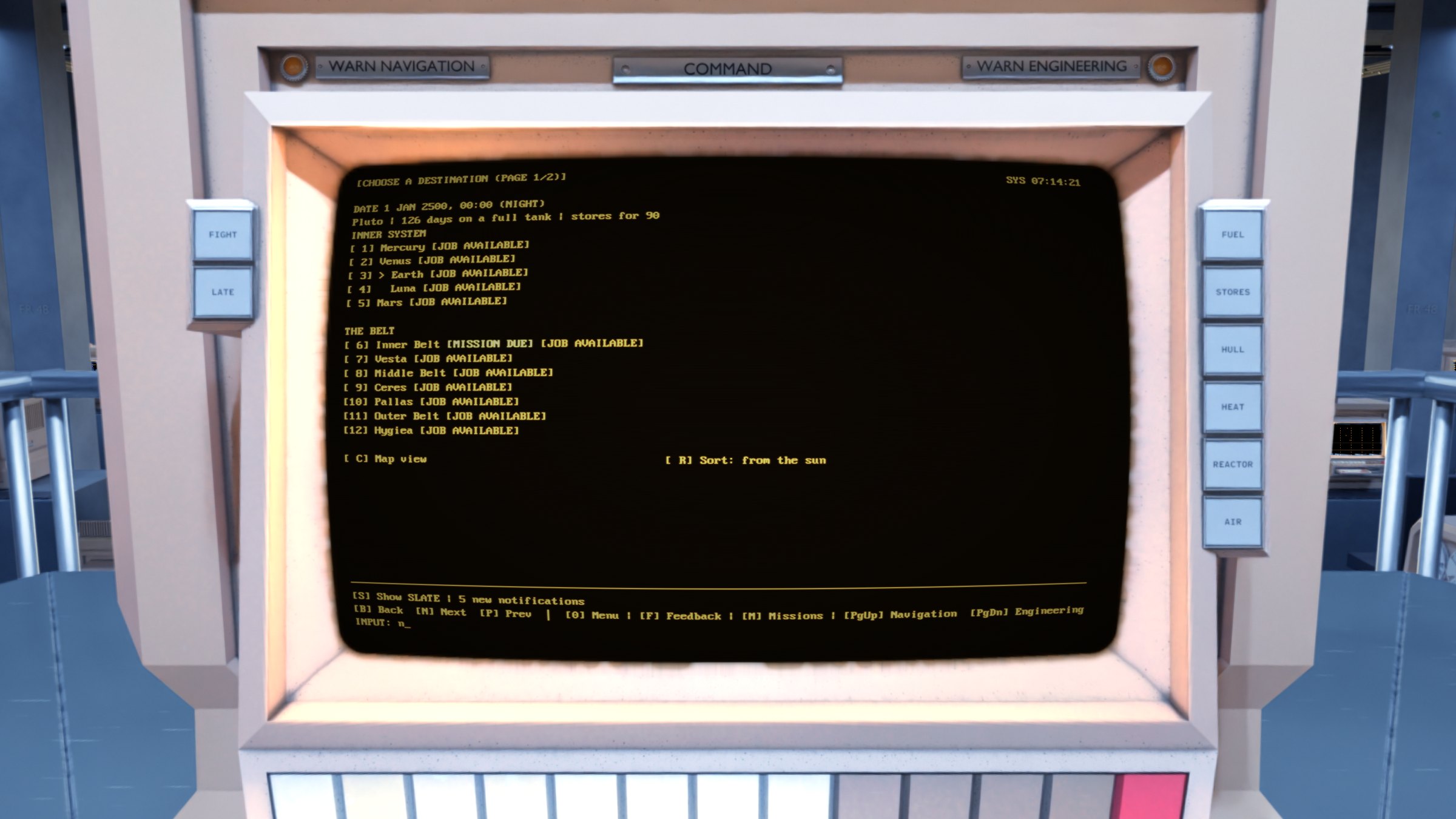
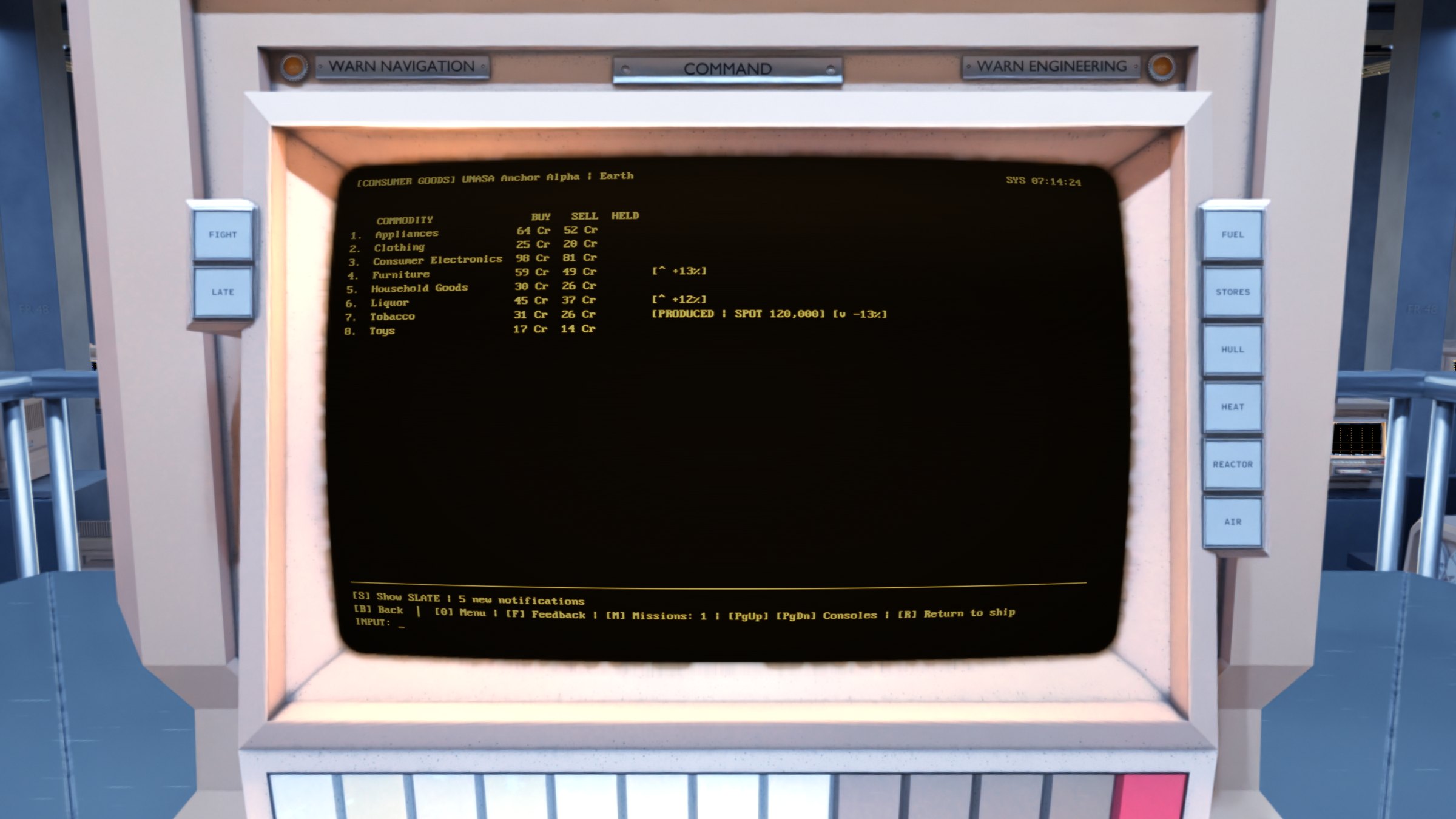
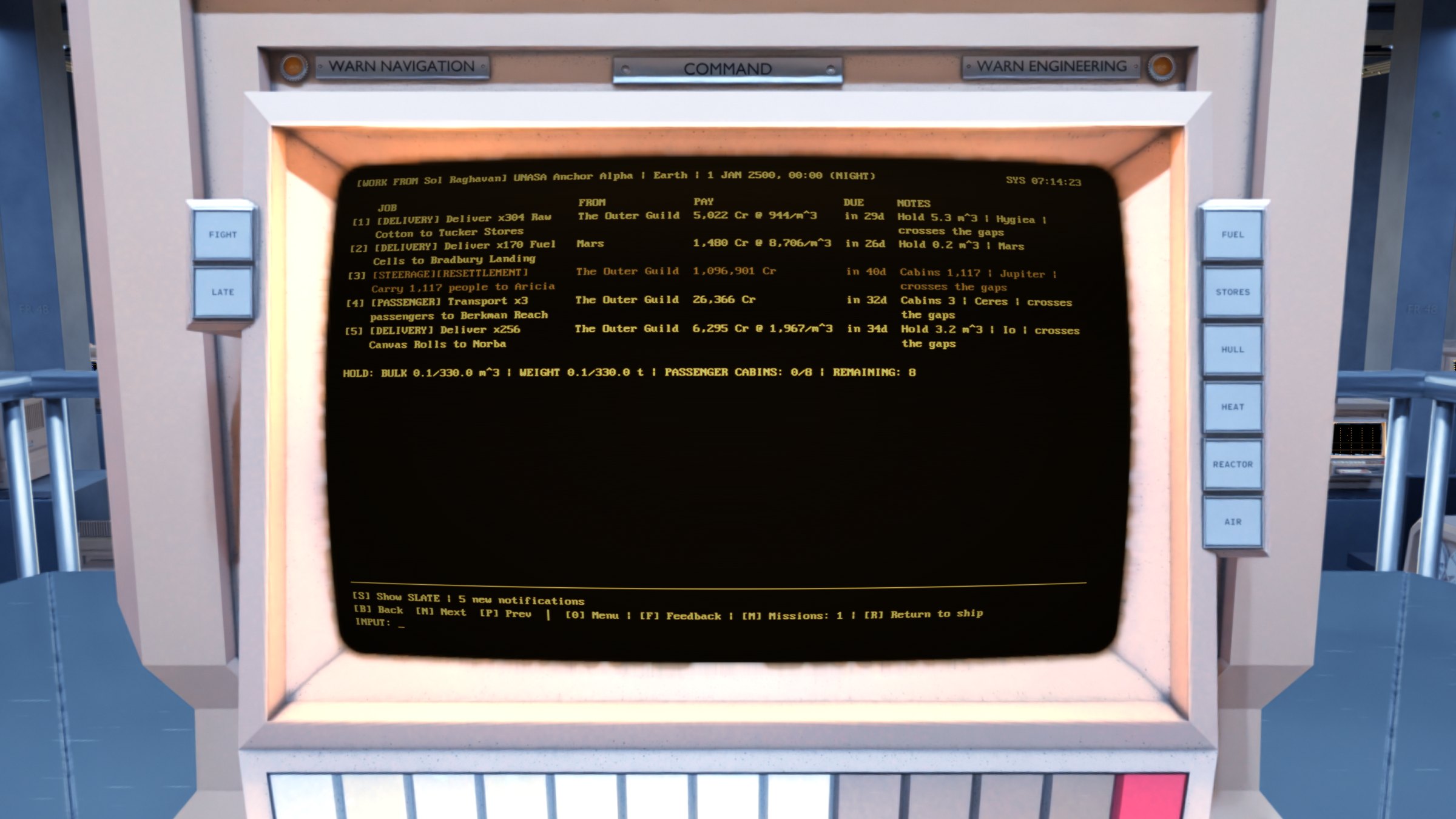
Console art: renders of "Quadronic 250 - computer that never existed" by AfBu (sketchfab.com/3d-models/quadronic-250-computer-that-never-existed-b945947a2c1d4b18812abe59392f715a), CC BY-SA 4.0. The pictures are changed from the original: the screen is replaced, parts are added, and the plastics are worn. These pictures are shared under the same license, CC BY-SA 4.0 (creativecommons.org/licenses/by-sa/4.0). AfBu does not endorse this game.
Four Design Aspects
- Feature-complete:
- Game features must be thorough. Either the whole feature is implemented, or none of it is.
- Mechanic parity:
- I aim to ensure that whatever the player does, an NPC will call the same code to do the same action.
- Realism:
- Most in-game numbers are derived from the Atomic Rockets website and real sources, where one exists, in order to ensure an accurate simulation.
- Fun:
- The most important design aspect of The Infinite Diaspora; fun is a player decision with a cost on both sides, and the player sees the success odds of their decision before they choose.